
Real Estate Investment News & Insights
Explore investment guides for 1031 exchanges, 721 exchanges, Delaware Statutory Trusts (DSTs), REITs, and more.
Explore Our Investing Guides
Explore by Content Type
Explore by Topic
- 1031 Exchange
- 721 Exchange
- Apollo
- Bluerock
- Bridgeview
- Capital Square
- Delaware Statutory Trusts
- ExchangeRight
- Griffin Capital
- Inland
- Invesco
- Investment Sponsors
- Jerry Baker's Insights
- Mineral Rights
- Net Lease Capital
- Oil & Gas
- Opportunity Zones
- Peachtree
- Qualified Opportunity Zone Funds
- REITs
- Resource Royalty

Top 10 Myths & Truths of DST Investing
Explore the top 10 myths about Delaware Statutory Trusts (DSTs). Learn the truth about fees, control, and why a 1031 exchange into a DST is a passive power move.
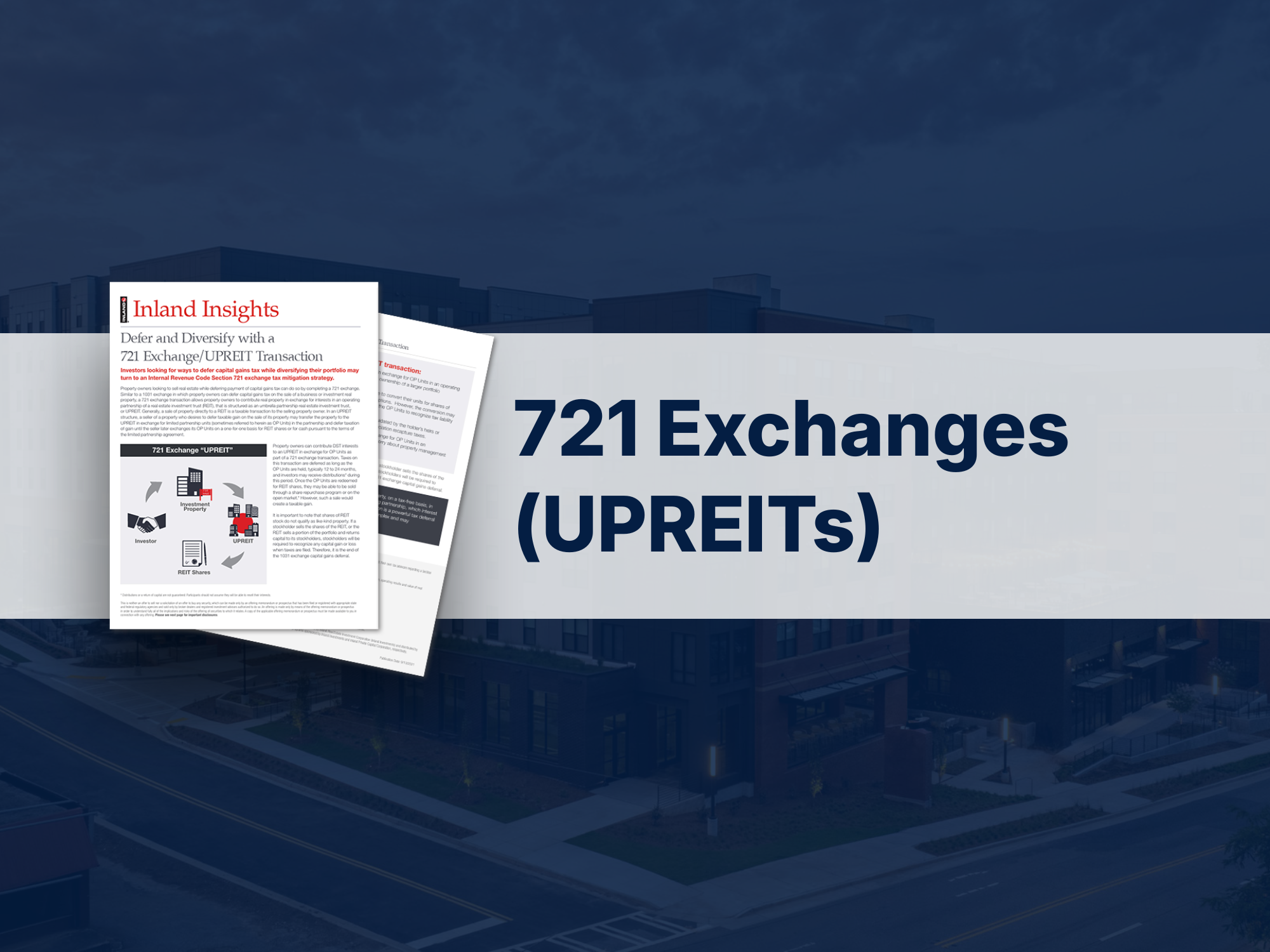
721 Exchange/UPREIT Transactions
Exchange property, defer taxes, and gain liquidity. This article explains how a 721 exchange works and highlights several potential benefits of this strategy. If you own an investment property and are interested in exchanging it for a more passive investment that provides liquidity, this article is for you.
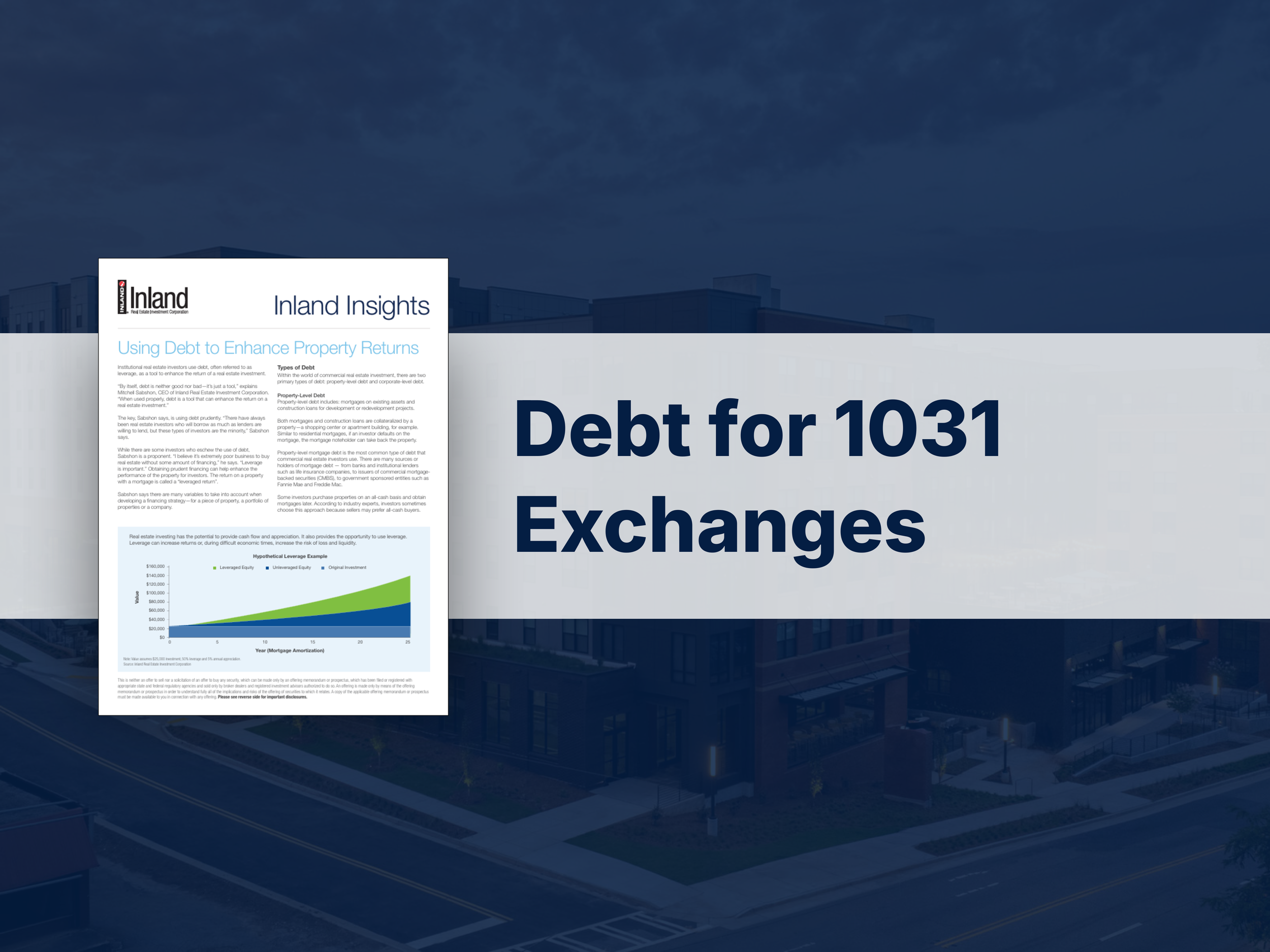
Using Debt to 1031 Exchange
Many real estate investors use debt (also called leverage) to boost returns. This guide explains how to use a mortgage or loan in your 1031 exchange — and why it matters for your tax deferral.
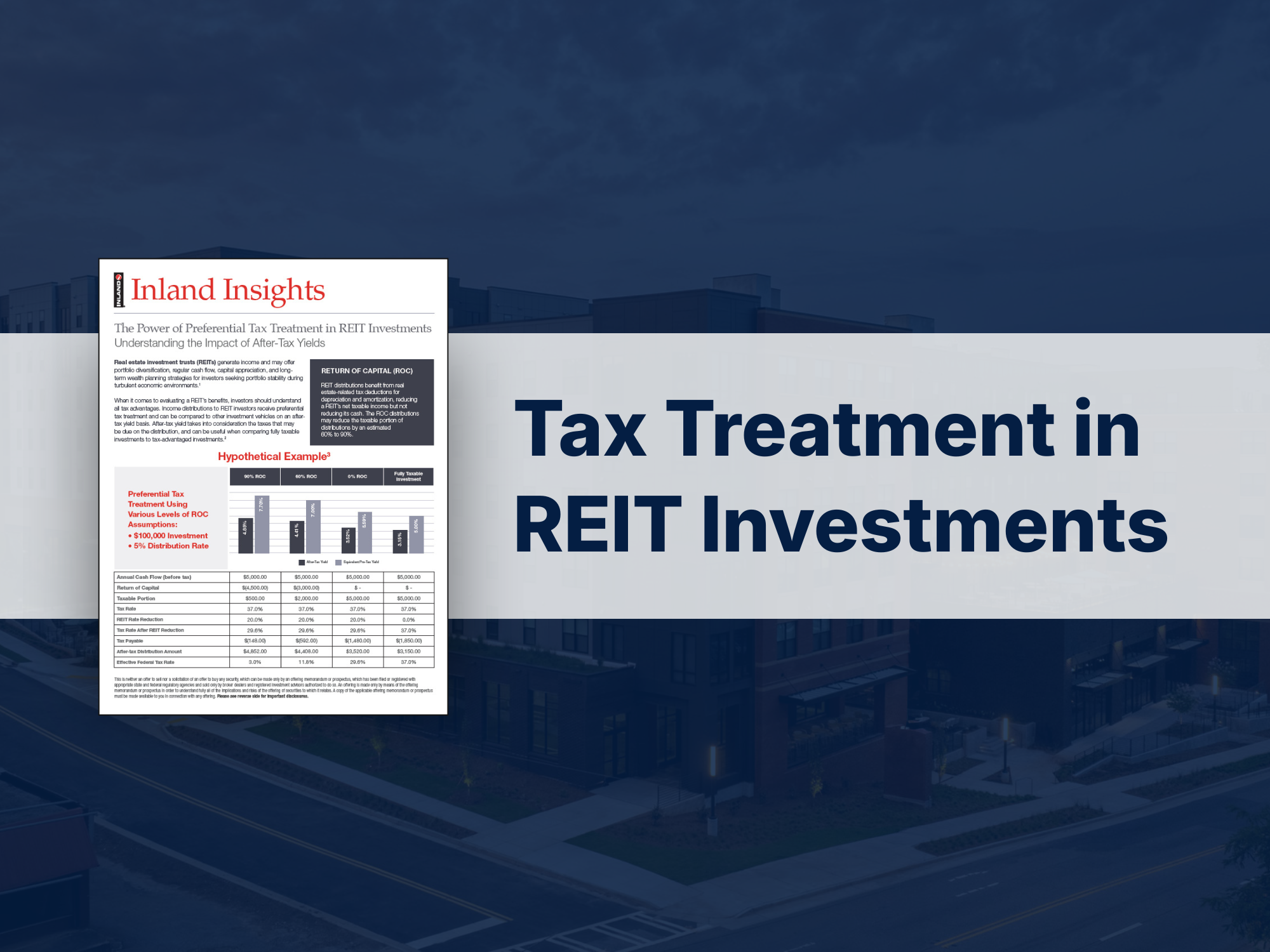
The Power of Preferential Tax Treatment in REIT Investments
When it comes to evaluating the tax advantages of a real estate investment trust (REIT) investors should understand the impact of after-tax yield. Read this article to learn how income distributions to REIT investors receive preferential tax treatment and can be compared to other investment vehicles on an after-tax yield basis with a hypothetical example.
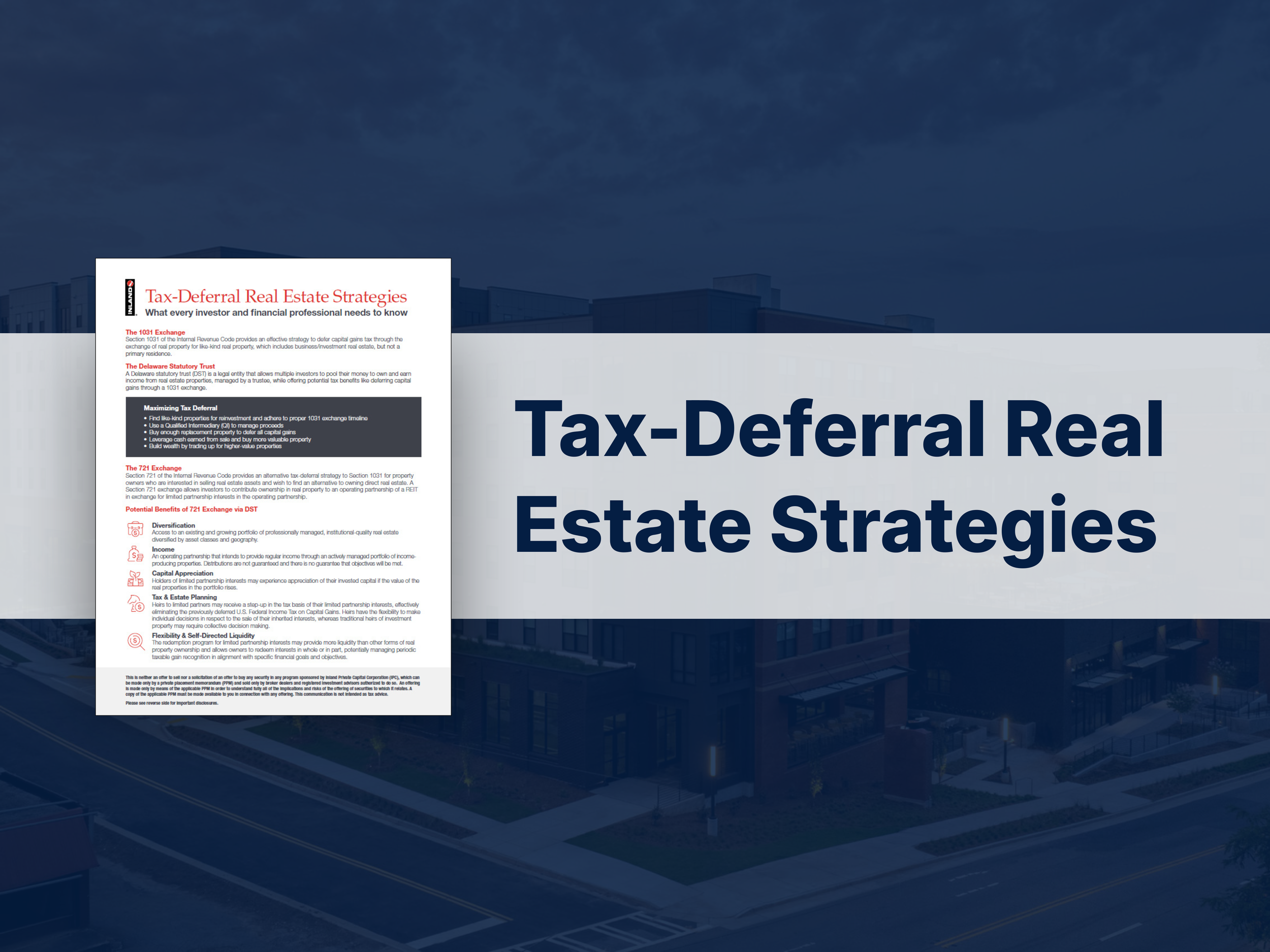
Tax-Deferral Real Estate Strategies
Compare 1031 exchanges, 721 exchanges, and Delaware Statutory Trusts (DSTs). Learn how to maximize tax deferral and which strategy fits your investment goals.

1031 DST Sponsor Spotlight: Inland
The Inland Real Estate Group has sponsored 313 private placement programs, acquiring more than $17 billion in assets and managing approximately $12.3 billion in assets under management (AUM).

1031 DST Sponsor Spotlight: Net Lease Capital
Net Lease Capital Advisors offers expertly structured Delaware Statutory Trust (DST) investments, providing access to institutional-quality real estate opportunities.

1031 DST Sponsor Spotlight: BridgeView Capital
Bridgeview Real Estate is a privately held owner, developer, and operator of commercial real estate in Texas with a primary focus on opportunistic multifamily, office, and mixed-use properties.
1031 DST Sponsor Spotlight: Invesco
Invesco Real Estate Exchange LLC, a subsidiary of Invesco Real Estate Income Trust Inc., offers DST investment solutions aimed at helping investors defer capital gains taxes through 1031 Exchanges.

1031 DST Sponsor Spotlight: Apollo
Founded in 1990, Apollo Global Management, Inc. (Apollo) is a high-growth alternative asset manager with approximately $1T under management.

1031 DST Sponsor Spotlight: Griffin Capital
Griffin Capital focuses on properties in strategic locations with strong economic and demographic fundamentals, providing the potential for stable income and long-term appreciation.

1031 DST Sponsor Spotlight: Capital Square
Capital Square uses the Delaware Statutory Trust (DST) structure to make quality real estate available to a larger number of investors.

1031 DST Sponsor Spotlight: Peachtree
Peachtree Group offers a platform featuring multifamily and hospitality assets, aiming to provide stable income and potential appreciation.

1031 DST Sponsor Spotlight: Bluerock
Bluerock seeks to deliver stable cash flows and potential for value creation. Bluerock has structured 1031 exchanges on over $1.8 billion in total property value and over 10 million square feet of property.

1031 DST Sponsor Spotlight: ExchangeRight
ExchangeRight is a Pasadena, CA-based real estate investment firm specializing in net-leased assets within the retail and healthcare sectors.
Frequently Asked Questions
Get clear, simple answers to the most common questions about 1031 exchanges, DSTs, and tax-deferred real estate investing.
What is a 1031 exchange?
A 1031 exchange is a tax-deferral strategy under Section 1031 of the Internal Revenue Code. It allows real estate investors to sell an investment property and reinvest the proceeds into a new like-kind property — while deferring capital gains taxes. The exchange must follow specific IRS rules, including a 45-day identification period and a 180-day closing deadline. Learn more about 1031 exchange strategies →
What is a Delaware Statutory Trust (DST)?
A Delaware Statutory Trust (DST) is a legal entity that holds title to real estate. DSTs allow multiple investors to own fractional interests in large, institutional-quality properties — like apartment buildings, medical offices, and warehouses. DSTs are commonly used in 1031 exchanges because they qualify as like-kind replacement property. This lets investors defer capital gains taxes while investing passively in professionally managed real estate. Read: Top 10 Myths of DST Investing →
What is a 721 exchange or UPREIT?
A 721 exchange — also called an UPREIT (Umbrella Partnership Real Estate Investment Trust) — allows a property owner to contribute their real estate into an operating partnership in exchange for partnership units. These units can later be converted to REIT shares, providing liquidity and diversification while deferring capital gains taxes. Read our full 721 exchange guide →
Can you use debt in a 1031 exchange?
Yes. Investors can use debt (also called leverage) in a 1031 exchange. To fully defer taxes, the replacement property must have equal or greater debt and equity compared to the property being sold. If the replacement property has less debt, the difference may be treated as taxable boot. Learn how debt works in a 1031 exchange →
What is the difference between a 1031 exchange and an Opportunity Zone investment?
Both are tax-advantaged real estate strategies, but they work differently. A 1031 exchange defers capital gains taxes by reinvesting in like-kind property. An Opportunity Zone investment defers and potentially reduces capital gains by investing in designated economically distressed areas. 1031 exchanges require like-kind property; Opportunity Zones require investment in a Qualified Opportunity Fund. Compare both strategies side by side →
Have a question we didn't cover? Our team is ready to help.
Explore Available Investments →